
Gamma radiation is a form of electromagnetic radiation with extremely high frequency and energy, capable of penetrating most materials. This article looks into its discovery, characteristics, sources, applications, and the implications of its use, both beneficial and hazardous. We explore the science behind gamma rays, their role in medicine, industry, and research, and the necessary safety measures to mitigate the risks associated with exposure.
Introduction to Electromagnetic Radiation
Gamma electromagnetic radiation, often simply referred to as gamma rays, represents one of the most energetic forms of electromagnetic radiation. Its high frequency and short wavelength are distinguished by its high frequency, which endows it with significant penetrating power. Unlike alpha and beta radiation, gamma rays can traverse dense materials and are primarily stopped by thick layers of lead or concrete. This essay explores the nature of gamma radiation, its sources, applications, and the associated risks and safety protocols.
Discovery and Characteristics of Gamma Radiation
Gamma radiation was discovered by French chemist Paul Villard in 1900 while he was investigating the emissions from radium. Unlike alpha and beta particles, which are charged and have mass, gamma rays are uncharged photons, placing them in the same category as X-rays but with much higher energy.
Properties of Gamma Rays
Gamma rays are characterised by:
- High frequency: Gamma rays have frequencies above 1019Hz.
- Short wavelength: Their wavelengths are less than 10 picometres.
- High energy: They possess energies exceeding 100 keV, often reaching into the MeV range.
These properties make gamma rays highly penetrative and capable of passing through most substances, which necessitates heavy shielding for protection.
Sources of Gamma Radiation
Gamma radiation can originate from various natural and artificial sources. Understanding these sources is crucial for harnessing its benefits and mitigating its risks.
Natural Sources
- Radioactive Decay: Gamma rays are emitted during the decay of radioactive isotopes, such as uranium-238, thorium-232, and radium-226.
- Cosmic Rays: High-energy particles from space interact with the Earth’s atmosphere, producing gamma rays.
- Solar Flares: The Sun can emit gamma rays during solar flares and other energetic processes.
Artificial Sources
- Nuclear Reactions: Gamma radiation is produced in nuclear reactors and during the detonation of nuclear weapons.
- Medical Isotopes: Radioisotopes like Technetium-99m and Iodine-131 emit gamma rays and are used in medical diagnostics and treatment.
- Industrial Radiography: Gamma radiation is employed in non-destructive testing to inspect the integrity of materials and structures.
Applications of Gamma Radiation
Gamma radiation has a wide range of applications across various fields due to its penetrating ability and high energy.
Medical Applications
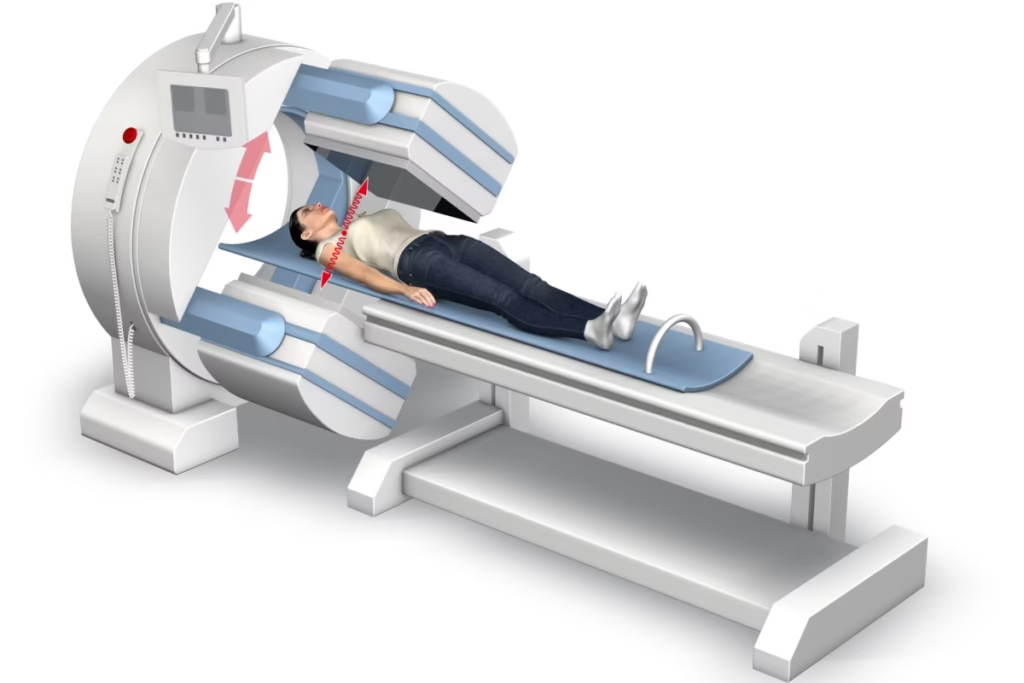
- Diagnostic Imaging: Gamma rays are used in nuclear medicine to create images of the inside of the body. Techniques such as Positron Emission Tomography (PET) and Single Photon Emission Computed Tomography (SPECT) rely on gamma-emitting isotopes.
- Cancer Treatment: Gamma rays are employed in radiotherapy to target and destroy cancerous cells. Linear accelerators and cobalt-60 sources are commonly used for this purpose.
Industrial Applications
- Non-Destructive Testing: Gamma radiography is used to inspect welding seams, castings, and other structural components for internal defects without damaging the material.
- Sterilisation: Gamma rays destroy bacteria and other pathogens, sterilizing medical equipment, pharmaceuticals, and even food.
Scientific Research
- Astronomy: Gamma-ray astronomy studies cosmic phenomena such as supernovae, neutron stars, and black holes. Instruments like the Fermi Gamma-ray Space Telescope have advanced our understanding of the universe.
- Material Analysis: Techniques like Gamma-ray Spectroscopy help identify the composition of materials by analysing the emitted gamma rays from radioactive decay.
Safety and Risks of Gamma Radiation
While gamma radiation has numerous beneficial applications, its high energy and penetrating power pose significant risks to human health and the environment.
Health Risks
- Acute Radiation Syndrome: High doses of gamma radiation can cause radiation sickness, characterised by nausea, vomiting, and hair loss, and in severe cases can be fatal.
- Cancer Risk: Prolonged or high exposure to gamma rays increases the risk of cancer, as they can damage DNA and cause mutations.
- Radiation Burns: Exposure to high levels of gamma radiation can cause burns and tissue damage.
Environmental Impact
- Radioactive Contamination: Accidents involving radioactive materials, such as nuclear plant failures or improper disposal, can lead to environmental contamination, affecting soil, water, and ecosystems.
- Waste Management: The disposal of radioactive waste, including materials that emit gamma radiation, requires stringent measures to prevent leakage and exposure.
Safety Measures
- Shielding: Use of materials like lead and concrete to absorb gamma rays and protect against exposure.
- Distance: Following the inverse square law, increasing distance from gamma radiation sources reduces exposure.
- Time: Minimising the time spent near gamma sources decreases the cumulative dose received.
- Personal Protective Equipment (PPE): Use of specialised protective clothing and devices to reduce exposure in medical and industrial settings.
Conclusion
With its high energy and penetrating power, Gamma radiation plays a pivotal role in modern science, medicine, and industry. Its discovery has led to significant advancements, particularly in medical diagnostics, treatment, and industrial applications. However, the same properties that make gamma rays useful also pose substantial risks. Effective safety measures and proper handling protocols are essential to harness the benefits of gamma radiation while minimising its hazards. Understanding and respecting the power of gamma rays is crucial for their safe and beneficial use in our daily lives.
Disclaimer
The content provided in this article is intended for general informational and educational purposes only. While every effort has been made to ensure the accuracy of the information presented. This article should not be used as a substitute for professional advice, training, or consultation in the fields of radiation safety, medical practice, or industrial operations.
Individuals working with or exposed to gamma radiation must follow local regulations, safety protocols, and professional guidance issued by relevant authorities and qualified experts.
Any references to medical or industrial applications of gamma radiation are provided for illustrative purposes and do not constitute an endorsement or recommendation. Always seek advice from qualified professionals when dealing with radioactive materials or radiation-emitting equipment.