
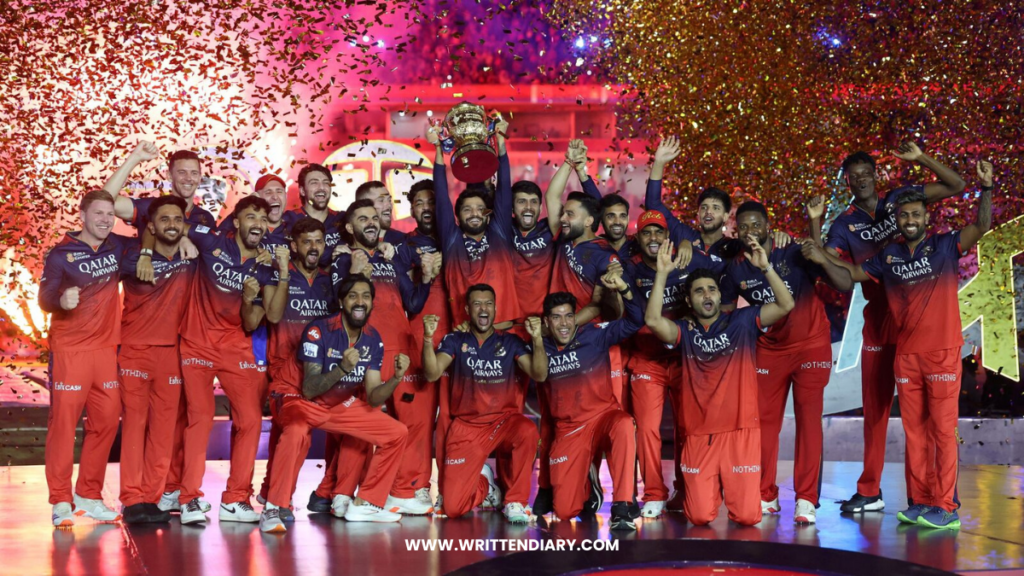
Source : Twitter
The countdown to the next season of the Indian Premier League has officially begun — but with a slight change in schedule. According to developments shared widely on Twitter (X), the Board of Control for Cricket in India has shifted the opening date of IPL 2026 from March 26 to March 28 due to upcoming state assembly elections in Assam, West Bengal, and Tamil Nadu.
While a two-day delay may appear minor, it reflects the complex coordination required between cricket administrators, state governments, security agencies, and broadcasters. The update has already sparked discussion among fans, franchises, and analysts eager to see how the 2026 edition unfolds.
With 10 teams, 84 matches, and a final scheduled for May 31, IPL 2026 promises another blockbuster season — but not without logistical challenges, especially for defending champions Royal Challengers Bengaluru.
Why the IPL 2026 Opener Was Shifted
The BCCI had originally informed franchises on December 15, 2025, that the season would commence on March 26. However, with state elections scheduled in Assam, West Bengal, and Tamil Nadu, security deployment became a key concern.
Large-scale elections in India require extensive police and administrative resources. Hosting high-profile IPL matches simultaneously would strain security forces, particularly in metropolitan cities where stadium security, crowd control, and VIP arrangements demand meticulous planning.
By shifting the opener to March 28, the BCCI has demonstrated proactive scheduling — aiming to avoid clashes that could compromise safety or disrupt operations.
The move, though subtle, highlights the IPL’s scale. It is no longer merely a cricket tournament; it is a nationwide event intertwined with governance, security planning, and massive logistical coordination.
The Role of the IPL Governing Council
The IPL Governing Council is set to meet next week for a partial release of the schedule. While the full fixture list has not yet been made public, insiders suggest that initial matchups and venue allocations will be clarified soon.
Traditionally, the IPL schedule is rolled out in phases when elections are involved. This allows authorities to adjust venues and match timings depending on polling dates and security advisories.
Given the political calendar in 2026, fans can expect a carefully staggered schedule — possibly with neutral venues stepping in where needed.
Defending Champions Face Venue Uncertainty
One of the biggest talking points heading into IPL 2026 is the home ground situation for Royal Challengers Bengaluru.
The franchise, which lifted its maiden IPL title last season, may not be able to start its campaign at its traditional fortress — M. Chinnaswamy Stadium.
The uncertainty stems from the tragic stampede that occurred during last year’s title celebrations, resulting in the loss of 11 lives. The heartbreaking incident prompted scrutiny of crowd management protocols and safety measures around large gatherings.
While the stadium itself remains structurally intact, authorities are reportedly reassessing safety arrangements for major events. Until all clearances are finalized, RCB is exploring alternative venues.
Possible Alternative Venues
Two cities have emerged as potential temporary homes for RCB:
- Navi Mumbai
- Raipur
Navi Mumbai offers world-class infrastructure and proximity to broadcasting hubs. Raipur, meanwhile, has successfully hosted IPL matches in the past and provides a neutral yet passionate cricket audience.
If RCB is forced to relocate temporarily, it could alter team dynamics. Home advantage in the IPL often plays a significant role, with teams tailoring strategies to pitch conditions and crowd energy.
The final decision will likely depend on security clearance timelines and election schedules.
The Emotional Weight of Last Year’s Tragedy
The stampede during RCB’s title celebrations cast a somber shadow over what should have been a historic moment for the franchise.
Winning the IPL after years of near-misses was a dream realized for fans. However, the tragedy that followed led to nationwide mourning and calls for stricter crowd control measures at large public events.
As IPL 2026 approaches, the league faces the delicate task of balancing celebration with sensitivity. Enhanced security protocols and better crowd management systems are expected across venues.
The incident has also sparked broader conversations about event planning standards in Indian sport.
Tournament Format: 10 Teams, 84 Matches
IPL 2026 will maintain its 10-team format, ensuring a packed calendar of 84 matches.
The expanded structure offers:
- More double-headers
- Increased regional engagement
- Greater broadcast reach
- Enhanced sponsorship value
With the final scheduled for May 31, fans can anticipate over two months of high-intensity cricket.
The extended format ensures every team has ample opportunity to build momentum, recover from early setbacks, and push for playoff qualification.
Election Impact on Sports Scheduling
India has witnessed several instances where elections influenced sports scheduling.
Security personnel deployment during elections is extensive, covering polling booths, political rallies, and counting centers. Coordinating IPL matches during this period requires precise planning.
In some previous seasons, matches were shifted to neutral venues or rescheduled to accommodate election phases. The IPL’s flexibility in adapting to such circumstances demonstrates its administrative maturity.
The 2026 adjustment continues this pattern of pragmatic decision-making.
Twitter Reacts to the Schedule Change
The update regarding the new start date quickly gained traction on Twitter (X).
Fans expressed mixed reactions:
- Some welcomed the proactive move to ensure safety.
- Others speculated about how the delay might affect player availability and preparation.
- Many eagerly awaited the release of the full schedule.
The hashtag related to IPL 2026 began trending shortly after the news circulated, underscoring the tournament’s digital dominance.
In today’s era, Twitter often serves as the first platform where sports scheduling news gains widespread attention.
RCB’s Title Defense: High Expectations
As defending champions, Royal Challengers Bengaluru enter IPL 2026 with heightened expectations.
Winning the title has shifted the narrative around the franchise. No longer underdogs chasing history, they now carry the burden of defending champions.
If venue uncertainty persists, adaptability will be crucial. Successful teams in the IPL often thrive despite travel challenges and shifting venues.
RCB’s management will be closely monitoring developments as they finalize training camps and logistics.
Strategic Implications of the Delayed Start
Although a two-day delay seems minor, it can influence several factors:
- Player arrival timelines
- Practice schedules
- Broadcast programming
- Sponsor activations
International players participating in multiple leagues must coordinate travel carefully. A revised start date may offer slight flexibility in transition planning.
Broadcasters, too, must adjust programming grids to align with the new opener.
Such micro-adjustments ripple across the ecosystem of the IPL.
The Bigger Picture: IPL as a National Phenomenon
Since its inception in 2008, the IPL has grown into one of the world’s most valuable cricket leagues.
It influences:
- Advertising trends
- Digital streaming metrics
- Regional tourism
- Urban infrastructure planning
A scheduling tweak due to elections reflects how deeply intertwined the league is with national rhythms.
Few sporting events in the world operate on such a scale.
What to Expect from the Partial Schedule Release
With the IPL Governing Council meeting next week, fans can anticipate a partial schedule announcement.
Typically, this includes:
- Opening match details
- Venue confirmations for initial weeks
- Key marquee clashes
The full schedule may follow once election timelines are fully synchronized.
Teams and fans alike are eagerly waiting to mark their calendars.
Balancing Cricket and Civic Responsibility
The IPL’s decision to adjust its start date reflects responsible governance.
Rather than risking overstretched security forces or logistical complications, administrators opted for a minor shift that safeguards operations.
This approach reinforces the league’s commitment to safety and smooth execution.
It also sets a precedent for future coordination between sports bodies and civic authorities.
The Road to May 31
With the final slated for May 31, IPL 2026 promises a dramatic crescendo to the summer.
Playoff races are expected to intensify in mid-May, as teams jostle for top-four positions.
The expanded format ensures that every match carries weight — from early-season momentum builders to late-stage knockout deciders.
The journey from March 28 to May 31 will once again captivate millions.
Looking Ahead
As anticipation builds, IPL 2026 stands at the intersection of sport, governance, and public sentiment.
The two-day postponement may appear minor, but it symbolizes careful planning in a complex environment.
For Royal Challengers Bengaluru, questions about home advantage add intrigue. For fans, the wait for the full schedule fuels excitement.
And for the broader cricketing community, the upcoming season represents yet another chapter in the ever-evolving story of the Indian Premier League.
Final Thoughts
The shift of the IPL 2026 opener to March 28 underscores the league’s adaptability and foresight. Elections in Assam, West Bengal, and Tamil Nadu necessitated a thoughtful recalibration — one that prioritizes security and smooth operations.
As discussions unfold on Twitter and the IPL Governing Council prepares its partial schedule release, anticipation continues to build.
With 84 matches, 10 teams, venue intrigue, and a final set for May 31, IPL 2026 promises drama both on and off the field.
Cricket fans across India and beyond can mark their calendars — the spectacle begins on March 28.