
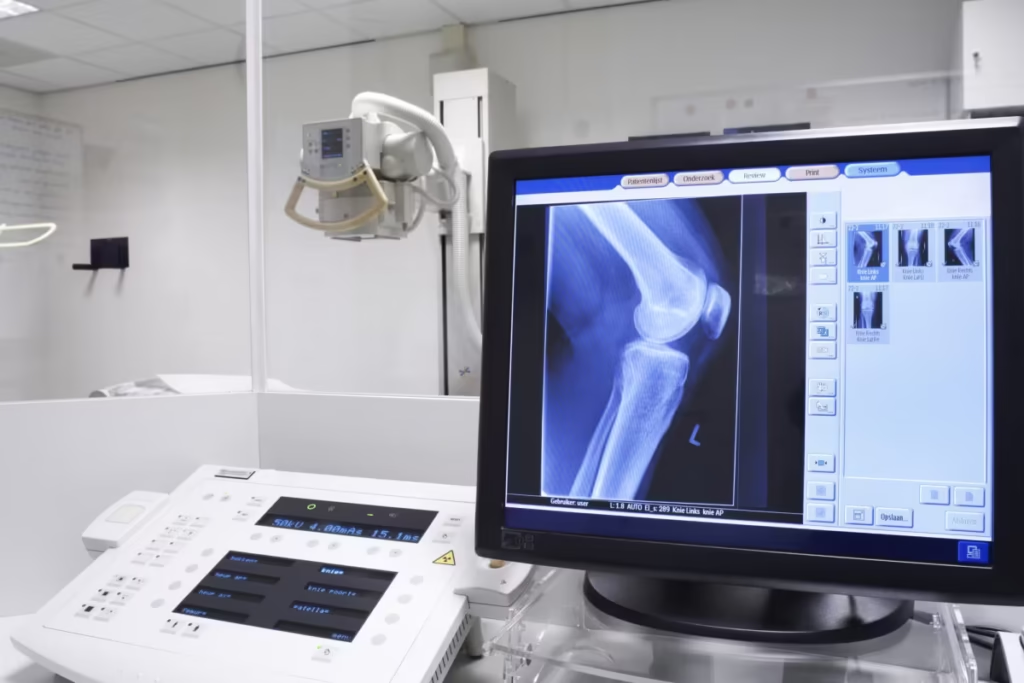
X-rays, a form of electromagnetic radiation, hold a pivotal place in science and medicine. They were discovered in 1895 by Wilhelm Conrad Roentgen, a German physicist, who stumbled upon them while experimenting with cathode rays. This serendipitous discovery earned him the first Nobel Prize in Physics in 1901. X-rays are distinguished by their high energy and short wavelength, allowing them to penetrate most substances and are instrumental in various applications.
In medicine, X-rays revolutionised diagnostics and treatment. They provided an unprecedented non-invasive means to peer inside the human body, revealing the internal structure of bones and soft tissues with the introduction of contrast agents. This capability transformed medical diagnosis, making it possible to accurately diagnose and treat conditions without the need for exploratory surgery.
Beyond medicine, X-rays found application in industries for quality control, security for scanning luggage, and scientific research, contributing to understanding molecular structures and the nature of matter.
Over the years, the evolution of X-ray technology has been marked by significant advancements. From the early rudimentary setups that exposed patients and operators to high levels of radiation, the field has advanced to highly sophisticated, precise, and safer digital radiography. Innovations such as computed tomography (CT) scans, which provide cross-sectional views of the body, and fluoroscopy, which enables real-time imaging, have further expanded X-ray imaging capabilities.
As we look into the history of X-rays, we will uncover how this remarkable discovery was made, how it evolved through the trials of war and peace, and how it continues to evolve, promising new horizons in medical science and beyond.
Discovery of X-rays: Wilhelm Conrad Roentgen
The discovery of X-rays by Wilhelm Conrad Roentgen in 1895 stands as one of the most groundbreaking moments in the history of science and medicine. Roentgen, a German physicist, was not searching for X-rays when he stumbled upon them; his discovery was purely accidental, a testament to the unpredictable nature of scientific inquiry.
Roentgen was experimenting with cathode rays, a stream of electrons emitted from a cathode in a high-vacuum tube. On November 8, 1895, while working in his lab at the University of Würzburg, he noticed a mysterious glow emanating from a nearby chemically coated screen. Intrigued, Roentgen realised that this fluorescence was caused by a new type of ray, unknown until then, which he temporarily named ‘X-rays’ – with ‘X’ symbolising the unknown.
In a series of meticulous experiments that followed, Roentgen established several fundamental properties of these new rays. He found that they could penetrate various materials, including paper, wood, and cloth, but not lead or heavy metals. He also discovered that these rays could impress photographic plates and cause certain materials to fluoresce.
One of the most iconic moments in Roentgen’s exploration of X-rays was the creation of the first X-ray photograph – an image of his wife, Anna Bertha Ludwig’s hand. This image, taken on December 22, 1895, displayed the stark contrast between the soft tissues of her hand and the dense bones, revealing her wedding ring and the bones of her fingers. The photograph, striking in its clarity and detail, was a compelling proof of the potential of X-rays in medical diagnostics.
Anna’s reaction to this image was reportedly one of awe and fear; she exclaimed, “I have seen my death!” This photograph not only marked a pivotal moment in the understanding of human anatomy but also heralded the dawn of diagnostic radiology. Roentgen’s meticulous work and his subsequent generous decision not to patent his discovery but rather share it freely with the world accelerated the application of X-rays in various fields, especially in medicine.
The discovery of X-rays by Roentgen thus opened a new window into the human body, allowing for a non-invasive way to examine the internal structure previously hidden from the naked eye and accessible only through surgical means. This remarkable discovery, for which Roentgen was awarded the first Nobel Prize in Physics in 1901, laid the foundation for a century of medical and scientific advancement.
Early Uses and Developments
The discovery of X-rays captured the scientific community’s and general public’s attention and imagination. This novel, invisible form of radiation, capable of penetrating solid objects and revealing their internal structure, was seen as a marvel of the modern age. The rapid dissemination of Roentgen’s findings, facilitated by the recent invention of the telegraph and an increasingly connected global scientific community, led to a flurry of experimentation and application across the world.
Immediate Interest in X-rays
- Scientists and doctors worldwide quickly replicated Roentgen’s experiments. There was a sense of excitement about the potential applications of this new form of radiation.
- Universities, hospitals, and private laboratories began exploring the properties of X-rays. There was a rush to understand and harness this new technology, often with little regard for safety, as the harmful effects of radiation were not yet understood.
Early Uses in Medicine
- One of the earliest and most significant applications of X-rays was in the field of medicine. Within weeks of Roentgen’s announcement, physicians started using X-rays to diagnose and treat various medical conditions.
- In January 1896, John Hall-Edwards, a doctor in Birmingham, England, took the first medical X-ray to diagnose a needle stuck in a woman’s hand. This event marked the first time X-rays were used for medical diagnosis.
- Soon after, X-rays began to be used for locating bullets and bone fractures. They became an essential tool in orthopaedics and surgery, enabling doctors to see inside a patient’s body without the need for invasive procedures.
Use of X-rays in the Military during World War I
- At the onset of World War I, the extensive use of X-rays in a military context was seen. Field hospitals were equipped with mobile X-ray units to assist in the treatment of wounded soldiers.
- These X-ray units played a crucial role in the war, significantly improving the treatment of gunshot and shrapnel injuries. Surgeons could locate and remove projectiles more accurately, reducing infection rates and improving recovery times.
- Marie Curie, the famous physicist and chemist, was instrumental in the development of mobile X-ray units, known as ‘radiology cars’ or ‘Little Curies.’ She personally helped to equip vans with X-ray equipment and trained medical personnel in their use, drastically improving medical care on the front lines.
The immediate post-discovery period of X-rays was characterised by a blend of awe, rapid application, and a somewhat naïve approach to handling the new technology. While these early endeavours significantly advanced medical science and care, they also led to the later realisation of the need for safety standards and regulations regarding the use of radiation.
Technological Advancements
The years following the discovery of X-rays witnessed significant advancements in the technology, enhancing its efficacy, safety, and range of applications. These developments were pivotal in cementing the role of X-ray technology as an indispensable tool in medical diagnostics and beyond.
Advancements in X-ray Tubes
- Coolidge Tube (Early 20th Century): A major advancement came with the invention of the Coolidge tube by William D. Coolidge in the early 20th century. This high-vacuum tube allowed more precise control of the X-ray beam, significantly improving the quality of X-ray images. Unlike its predecessors, which used gas as a medium for electron flow, the Coolidge tube used a heated filament to produce electrons, resulting in a more stable and stronger X-ray output.
- Rotating Anode X-ray Tubes (1930s): The development of rotating anode X-ray tubes in the 1930s further enhanced the quality and intensity of X-ray images. This innovation allowed for a higher dose of X-rays to be emitted without overheating the anode, facilitating clearer images and shorter exposure times.
Introduction of Contrast Agents
- Barium and Iodine-Based Agents (1920s): In the 1920s, the introduction of contrast agents marked a significant leap in medical imaging. These substances, often based on barium or iodine, are ingested or injected into the body to improve the contrast of X-ray images. They help to delineate structures such as blood vessels, gastrointestinal tract, and other soft tissues, which are otherwise difficult to visualise with standard X-ray techniques.
Image Intensifier and Digital Radiography
- Image Intensifier (1950s): The 1950s saw the invention of the image intensifier. This device amplified the X-ray signal to produce a brighter image on the monitor, reducing the amount of radiation exposure needed to produce a clear image. Image intensifiers significantly improved fluoroscopy, allowing real-time monitoring of body functions and guiding procedures such as catheter insertions.
- Digital Radiography (Late 20th Century): The advent of digital radiography in the late 20th century was a major milestone. Transitioning from traditional photographic film to digital sensors, this technology allowed for immediate image viewing and manipulation. It reduced the time for obtaining and processing X-ray images and significantly decreased the required radiation dose. Digital radiography systems provide better image quality, facilitate the storage and transmission of images (PACS – Picture Archiving and Communication Systems), and integrate well with other digital healthcare systems.
These technological advancements in X-ray equipment and techniques have significantly improved the diagnostic capabilities of medical imaging. They have reduced the risks associated with radiation exposure, enhanced image quality, and streamlined the imaging process, thereby vastly improving patient care and treatment outcomes.
Understanding and Mitigating Risks
Realising their inherent dangers soon tempered the excitement surrounding the medical and scientific potential of X-rays. As the use of X-rays grew rapidly in the years following their discovery, so too did the reports of adverse effects, leading to a greater understanding of radiation safety and the development of protective measures.
Early Recognition of the Dangers of X-Rays
- Radiation Burns and Injuries: One of the first indications of the potential harm caused by X-rays was the occurrence of radiation burns. Pioneering users of X-ray technology, including scientists, physicians, and technicians, began reporting severe burns and injuries after prolonged exposure to X-rays.
- Health Issues among Early X-ray Technicians: Many early X-ray technicians and doctors suffered from various health issues, including skin cancers, due to frequent and unprotected exposure to X-rays. These cases were pivotal in drawing attention to the need for safety precautions.
Development of Safety Measures and Regulations
- Lead Shielding and Protective Gear: As awareness of the risks increased, the development and use of protective measures, such as lead aprons and shields, became standard practice in radiography. The implementation of lead-lined rooms and protective barriers for both patients and operators was gradually adopted.
- Dosage Limitations and Monitoring: The establishment of safe exposure limits was a critical step forward. Organisations like the International Commission on Radiological Protection (ICRP) were founded to study and recommend guidelines on radiation exposure. Additionally, the use of dosimeters, which measure an individual’s exposure to radiation, became commonplace in medical and research settings.
- Regulatory Bodies and Standards: Regulatory bodies were established to oversee the use of X-rays and enforce safety standards. These organisations, including the United States Food and Drug Administration (FDA) and various international bodies, set forth regulations for manufacturing, using, and maintaining X-ray equipment.
Significant Figures in Radiation Safety
- Marie Curie: While best known for her pioneering work in radioactivity, Marie Curie also played a crucial role in the advancement of radiation safety. Her work in mobile radiography units during World War I provided vital medical support and contributed to understanding radiation exposure and the need for protective measures.
- William Herbert Rollins: Rollins, an American dentist and early advocate for radiation safety, is often considered the father of radiation protection. He conducted extensive research on the hazards of X-rays and advocated for using protective lead shields and establishing safety guidelines.
The recognition of the dangers of X-rays and the subsequent development of safety measures and regulations marked a significant evolution in the field of radiography. It paved the way for safer diagnostic practices and heightened awareness of radiation protection, safeguarding both medical professionals and patients.
Modern Applications
Today, X-ray technology is a cornerstone of medical imaging, providing crucial insights into the human body for diagnostic and therapeutic purposes. Its applications extend far beyond the area of medicine into industrial and astronomical fields, showcasing its versatility and indispensability.
Modern Applications in Medical Imaging
- Radiography: The most common use of X-rays is in radiography, which includes standard X-ray imaging used to visualise the internal structure of the body, particularly bones. It’s routinely used to detect fractures and infections and sometimes to diagnose lung and heart diseases.
- Computed Tomography (CT) Scans: CT scans represent a significant advancement in X-ray technology. CT scans create cross-sectional images (slices) of bones, blood vessels, and soft tissues inside the body by taking multiple X-ray images from different angles and using computer processing. This provides more detailed information than ordinary X-ray images, useful in diagnosing cancers, cardiovascular diseases, infectious diseases, trauma, and musculoskeletal disorders.
- Fluoroscopy: Fluoroscopy involves the use of X-rays to obtain real-time moving images of the internal structures of a patient. This technique is particularly useful during diagnostic and therapeutic procedures, such as catheter insertions, angiographies, and orthopaedic surgery, allowing for live guidance of these procedures.
Industrial Applications
- Non-Destructive Testing (NDT): X-rays are extensively used in industries for non-destructive testing of materials and structures. This application is crucial in detecting flaws or cracks in metal structures, welds, and pipelines, especially in the aerospace, automotive, and manufacturing sectors.
- Quality Control: In manufacturing, X-rays are used for quality control, ensuring the integrity and safety of products, particularly in the electronics industry for inspecting circuit boards and in the food industry for detecting foreign objects in packaged foods.
Astronomical Applications
- Astronomy and Astrophysics: In the field of astronomy, X-ray telescopes are used to observe and study X-ray emissions from celestial bodies such as black holes, neutron stars, and supernova remnants. X-rays emitted by these high-energy and extreme environments in space provide valuable information about the properties and behaviours of these astronomical objects.
- Space Exploration: X-ray imaging is also employed in space exploration missions to analyse the composition of celestial bodies. For example, rovers sent to planets like Mars use X-ray fluorescence to determine the elemental composition of the Martian surface, aiding in the study of the planet’s geology and history.
The versatility of X-ray technology, from revealing the complex structures within the human body to unlocking the mysteries of the universe, highlights its profound impact across various fields of study and industry. This technology continues to evolve, promising further advancements and applications in the future.
Future of X-ray Technology
The future of X-ray technology promises further innovations and advancements driven by ongoing research and technological developments. These future directions aim to enhance the capabilities of current X-ray applications and explore new frontiers in medical diagnostics, treatment, and beyond.
Future Developments in X-ray Technology
- Higher Resolution Imaging: Research is ongoing to develop X-ray imaging techniques that can provide even higher-resolution images. This advancement would allow for more detailed and precise visualisations of internal structures, potentially at a cellular or molecular level, greatly aiding in early disease detection and diagnosis.
- Reduced Radiation Exposure: A key area of focus is the reduction of radiation exposure to patients during X-ray procedures. Advancements in detector technology and image processing algorithms are expected to yield more efficient systems that require less radiation to produce high-quality images.
- 3D Imaging and Holography: 3D X-ray imaging and holography are areas of growing interest. These technologies could provide three-dimensional views of internal structures without the need for invasive procedures, offering a more comprehensive diagnostic tool.
- Portable and Affordable X-ray Devices: The development of smaller, more portable, and cost-effective X-ray devices could make this technology more accessible, especially in remote or under-resourced areas. This would facilitate wider use in a variety of settings, from small clinics to disaster zones.
Ongoing Research and Potential New Applications
- Phase-Contrast X-ray Imaging: This is an emerging technique where X-rays are used to image the variations in the phase of X-ray waves passing through different tissues rather than just their absorption. This method can provide much greater detail than conventional X-ray imaging, particularly for soft tissues.
- Theranostics: A promising area of research is the combination of therapy and diagnostics, known as theranostics. X-rays could be used not only for imaging but also for delivering targeted therapies, such as in the treatment of certain cancers.
- Nanotechnology in X-ray Imaging: Integrating nanotechnology with X-ray imaging is a potential development area. Nanoparticles can be used as contrast agents to enhance the visibility of certain tissues or tumours, potentially enabling earlier detection and more precise treatment.
- Artificial Intelligence Integration: AI and machine learning are expected to play a significant role in the future of X-ray technology. They can aid in image analysis, improving diagnostic accuracy, automating routine tasks, and even predicting health outcomes based on imaging data.
- Space Exploration and Astrophysics: In space exploration, advanced X-ray imaging techniques could be used to study cosmic phenomena and analyse the composition of celestial bodies with greater precision.
As X-ray technology continues to evolve, it holds the potential to revolutionise medical imaging and treatment and have significant impacts in fields as diverse as materials science, environmental monitoring, and space exploration. The intersection of X-ray technology with other rapidly advancing fields like nanotechnology and AI promises to open new horizons in both scientific research and practical applications.
Conclusion
The impact of X-rays on science and medicine has been profound and multifaceted, revolutionising diagnostic techniques and significantly enhancing our understanding of both the human body and the physical world.
Impact on Medicine
- Non-Invasive Diagnosis: X-rays have fundamentally transformed the way diagnoses are conducted. Prior to their discovery, many internal conditions could only be diagnosed through invasive surgical procedures. With X-rays, physicians can visualise the body’s internal structure non-invasively, leading to earlier, more accurate diagnoses and better patient outcomes.
- Advancements in Treatment: The ability to view the body’s internal workings has aided in diagnosis and treatment. X-rays are crucial in guiding surgical procedures, monitoring disease progression, and planning and delivering treatments, such as in oncology for radiation therapy.
- Widespread Accessibility: Over the years, X-ray technology has become more accessible and is now a standard tool in hospitals and clinics worldwide. This widespread availability has been instrumental in elevating the standard of care across diverse healthcare settings.
Impact on Science
- Understanding of Physical Properties: In the field of physics and materials science, X-rays have been pivotal in understanding the properties of materials. Techniques like X-ray crystallography have allowed scientists to determine the structure of crystals, leading to significant discoveries, including the structure of DNA.
- Innovations in Imaging Techniques: The evolution of X-ray technology has spurred innovations in imaging techniques, such as CT scans and fluoroscopy, which have applications beyond medicine, including in industrial quality control and security.
- Astrophysical Research: In astrophysics, X-ray telescopes have opened new avenues for exploring the universe. The study of X-ray emissions from celestial bodies has provided insights into phenomena like black holes and neutron stars, enhancing our understanding of the cosmos.
Revolutionising Diagnostic Techniques
X-rays have not only been a tool for diagnosis but have also revolutionised the entire approach to medical imaging. They have led to the development of a range of imaging modalities, including mammography, angiography, and computed tomography, each playing a crucial role in various aspects of healthcare.
Expanding Our Understanding of the Physical World
X-rays have extended our sensory capabilities, allowing us to see beyond the limits of human vision. This has had far-reaching implications in numerous fields, from archaeology, where X-rays are used to examine the interior of ancient artefacts, to environmental science, where they assist in analysing soil and water samples.
The discovery of X-rays represents a landmark in scientific and medical history. It has immensely contributed to our ability to diagnose and treat diseases, advanced numerous scientific fields, and fundamentally changed our understanding of the world around us. The ongoing evolution of X-ray technology continues to hold promise for future discoveries and innovations.
Disclaimer
The content provided in Radiant Discovery: The Transformative Journey of X-ray Technology in Medicine and Science is intended for general informational and educational purposes only. While efforts have been made to ensure the accuracy and reliability of the information presented, Written Diary makes no guarantees regarding its completeness, timeliness, or suitability for any particular purpose.
This article does not constitute professional medical, scientific, technical, or legal advice. Readers should not use the information contained herein as a substitute for consultation with qualified healthcare professionals, scientists, or regulatory experts. Decisions related to the use of X-ray technologies in clinical or industrial settings must always be guided by appropriate professional judgement and compliance with current safety standards and regulatory frameworks.
Written Diary does not accept any responsibility for any loss, injury, or damage resulting from the use or misuse of the information presented in this publication. All technologies, practices, and historical accounts mentioned are presented for context and discussion, and may not reflect current best practices, especially regarding safety and regulation.
References to individuals, institutions, or specific technologies do not imply endorsement, and any mention of historical practices should not be interpreted as recommendations for present-day use.
By accessing or reading this article, the reader acknowledges and accepts this disclaimer in full.